In psychology, it's now widely accepted that the mind and body influence each other. Yet, one biological system remains remarkably understudied in clinical practice: the gut microbiome. While evidence is mounting that this microecosystem plays a direct role in mood, stress regulation, and motivation, in practice, it's rarely incorporated into diagnosis or treatment planning. This is striking—because, especially in clients with complex or treatment-resistant symptoms, the gut-brain axis can shed light on missing pieces of the puzzle.
The gut-brain axis isn't a standalone therapeutic intervention, but a biological framework that can help explain why clients sometimes get stuck, respond inconsistently to treatment, or make little progress despite insight and motivation. For complaints where energy, mood, stress, and motivation play a significant role, the gut proves to be a surprisingly powerful player.
The basics: an ecosystem in the gut ensures neurotransmitter production
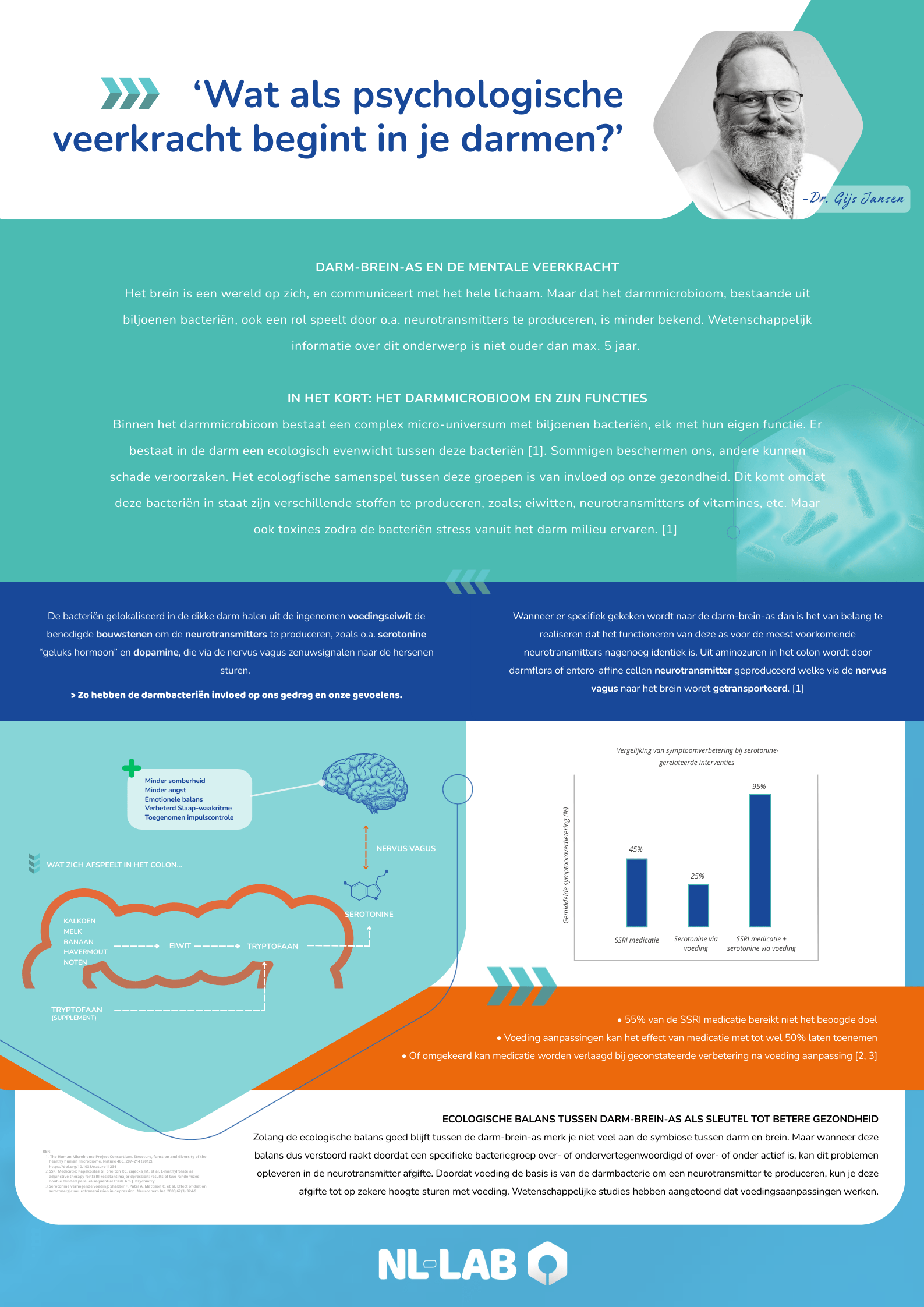
The human gut contains trillions of microorganisms that form a metabolic organ. It is known that they contribute to digestion and immune responses, but less well-known is that they produce neuroactive substances that influence the brain via nervous, immune, and metabolic pathways. For example, up to 90% of serotonin is produced outside the brain, in the gut—under the influence of specific bacterial groups. Although this peripheral serotonin does not directly cross the blood-brain barrier, it does influence central serotonergic balance via the vagus nerve, immune pathways, and tryptophan availability. Dopamine, GABA, norepinephrine, and histamine also have direct links to gut activity, inflammation levels, and dietary patterns. Neurotransmitter concentrations depend in part on bacterial turnover by specific bacterial groups and the presence of precursors that enter the body through food.
Take dopamine, for example. Dopamine is essential for motivation, reward, and goal-directed behavior, but it is biochemically dependent on amino acids like tyrosine and phenylalanine, which are found in all sorts of foods (yes, even chocolate!). The availability and metabolism of these amino acids are partly determined by the gut and its microbial population. Furthermore, inflammatory signals from the gut influence dopaminergic circuits in the brain, with potential effects on anhedonia, mental fatigue, and concentration. This doesn't mean that mental health issues are "in the gut." It does mean, however, that a disrupted microbiome can be an underlying, invisible biological factor that exacerbates symptoms and complicates treatment.
The dynamics: the microbiome is measurable and influenceable
Using the patented, unique C-FISH analysis technique, both the quantity and activity of bacterial groups can be measured. Along with various other microbiome parameters, the neurotransmitter production capacity for five different neurotransmitters can be measured.
The microbiome is not a static system. Unlike genetic factors, the microbiome can adapt within weeks. Bacterial compositions can shift due to stress, medication, and sleep, as well as diet. This plasticity makes it clinically relevant. By increasing precursors in case of deficiency, or shifting the activity and numbers of certain bacterial groups required for specific conversions, the gut microbiome's capacity to produce neurotransmitters can also be improved.
This makes this system a valuable starting point for treatment: biological, concrete and measurable.
A two-way street: drugs affect the gut — and vice versa
Psychotropic drugs are widely used in mental health care, and these too have a direct connection to the gut. The gut microbiome influences how psychotropic drugs are broken down, and can therefore partly determine their effectiveness and side effects. At the same time, antidepressants and antipsychotics themselves also alter the composition and function of the microbiome. Therefore, the effect of medication depends not only on its effects in the brain but also on its interaction with the gut.
Because nutrition influences the microbiome, inflammation, stress responses, and the production of neuroactive substances, targeted nutritional interventions may be clinically relevant—especially during medication withdrawal, when the nervous system is particularly sensitive to fluctuations and stabilizing support may be helpful.
An invitation to broaden clinical thinking
Involving the gut-brain axis doesn't mean reducing mental health issues to biology, but rather better understanding underlying physiological factors—especially when psychological interventions are insufficient. The added value lies not in quick results, but in greater stability, less physical noise, and greater receptivity to therapy and medication reduction. As a complementary layer within the biopsychosocial model, gut biology helps explain why combinations of psychotherapy, lifestyle, and medication are often more effective than a single intervention. It offers practitioners a direction that might otherwise easily remain invisible, complementing current treatment methods.
Interested or have questions?
NL-Labexpertsare available to explain the above in more detail through video consultations or on-the-job training programs. For more information, please contactinfo@nl-lab.nl
Read the scientific poster created by NL-Lab here >